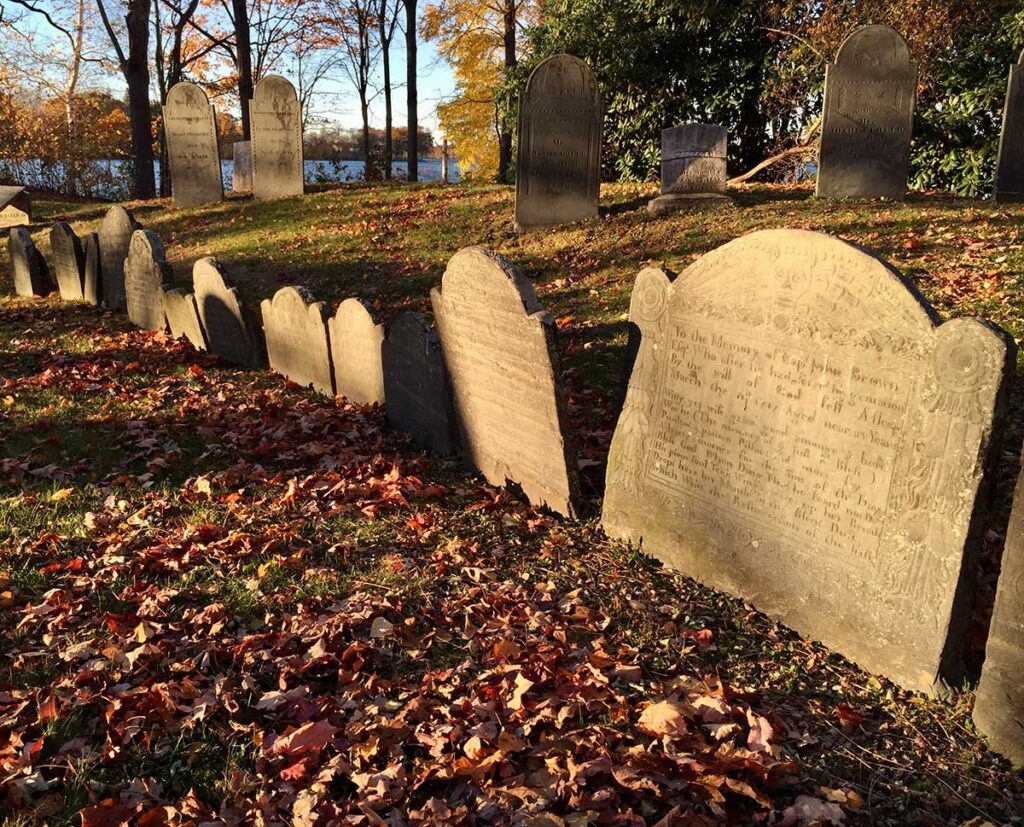
The Worshipful John Brown

CAPTAIN JOHN Brown’s gravestone is in fact about 50% wider; at least three feet of it is buried underground. His long inscription is quite eloquent and ends with “Witty, yet wise, grave, good, among the best Was he,—the memory of the just is blest.”

Wakefield’s Old Burying Ground is like an outdoor museum, filled with ‘artifacts’ reaching back to the town’s beginnings. Visitors can find the truest testament to those brave pioneers who first settled here, and their only monuments left standing.

In one way or another, the Old Burying Ground tells stories of those early settlers — their joys as well as their sorrows; their lives as well as their deaths. Through studies of the files of the Wakefield Historical Society and the Wakefield Historical Commission, it was possible to ‘resurrect’ some of their stories and, with the help of the Wakefield Item, to share them.  

By NANCY BERTRAND

On this, the 17th day of October, we introduce you to Captain John Brown described as “the worshipful John Browne” when he Captain Jeremiah Swain and Lt. William Hescy signed the Indian Deed “as trustees and prudentials” on behalf of the town. He was for many years one of the most respected citizens of the town, having served as selectman, representative, justice and captain. It has been noted that for many years he was the only one identified in town records as “Mister.” He was the son of one of the first settlers Nicholas Brown, of Inkborough, England whose signed document is one of the oldest in the collection of the Wakefield Historical Society.  

He made his home on a large and prosperous farm located in the vicinity of the present Hurd School and its environs. He married three times: Ann, daughter of John Fiske who died in 1682; Elizabeth Emerson, granddaughter of the town of Concord’s founder who died in 1693 at the age of 55; and Rebecca, widow of Samuel Sprague who died in 1710 at the age of 71.

In 1693, he was one of ten persons in the Commonwealth of Massachusetts to help draft a letter to their Majesties concerning the continuance of the Royal Governor. He was widely respected as one of the town’s most able, useful and respected men. He was also one of the town’s wealthiest citizens. It was astonishing to come across his name in reading testimonies of the 1692 trials of suspected witches. (We’ll touch on that subject…later in the month.)

John Brown died in 1717 at the age of 83. He was originally buried near where the Town House was later built, on the Common Burying Ground, but his gravestone now stands in the semicircle of ancient stones near the far western end of the Old Burying Ground.

Join us next week and all through October, when we share photos and stories about those who came before us in our early New England town.  

Shopping Cart
  • Your cart is empty.
Scroll to Top