
By NEIL ZOLOT
NORTH READING — In addition to the expected goals of improving student performance and test scores on the state MCAS test, School Improvement Plan goals at the town’s elementary schools in 2025-26 include using Multi-Tiered Systems of Support (MTSS) and Diversity Equity Inclusion and Belonging (DEIB) initiatives to foster a sense of community in each school.
“I’m glad we have a mix of goals,” School Committee member Tim Sutherland said during presentations by the three elementary school principals Monday night.
“I love this approach,” agreed Chairman Jeff Friedman.
“It’s a challenge,” J. Turner Hood School Principal Dr. Glen McKay admitted. “You have to be thoughtful.”
“During the first quarter, we developed a comprehensive MTSS framework inclusive of tiered behavioral interventions and began training all school staff on evidence-based practices rooted in positive behavior support and restorative approaches,” the Hood SIP states.
“Consistent behavior expectations were implemented across all settings, supported by a proactive reinforcement system and regular communication with families to ensure shared understanding of MTSS practices. Data systems are in place to track student behavior trends, and this information is being used to refine our interventions and support student well-being,” the Hood SIP continues. “Staff collaboration through professional learning has been instrumental in building capacity and consistency across the school.”
A DEIB goal at the Hood includes taking “meaningful steps to foster inclusivity by actively engaging the community in shaping culturally responsive practices. These efforts aim to ensure equitable access to education for all students, particularly those from marginalized or underrepresented populations.”
Key actions include reviewing a community engagement plan focused on cultural awareness, traditions, celebrations, and customs; initiating family conversations following staff consultations; incorporating the input of a dedicated Professional Learning Community study group, which created a culture-focused cookbook celebrating diverse family traditions and promoting cultural sharing within the school.”
More specific steps include developing and administering a culturally responsive family traditions survey, including dietary and non-dietary practices; ensuring equitable participation by offering the survey in multiple languages and formats; providing professional development on culturally responsive teaching and inclusive practices; developing lesson plans that integrate cultural, historical, and health perspectives on traditions into the curriculum; implementing age-appropriate classroom activities to explore diverse cultural traditions and dietary practices and celebrating cultural traditions through school-wide events and displays.
The E. Ethel Little School plan, presented by first-year Principal Julie Fahey includes a goal to “implement structured MTSS intervention blocks in all K–5 classrooms to strengthen foundational literacy, which will focus on reading comprehension, supported by the development and use of common resources and assessments and foster a school-wide culture of Inclusive Excellence and character development by embedding Diversity, Equity, Inclusion, and Belonging principles alongside the Six Pillars of Character into curriculum, behavior expectations, community engagement, and student leadership.” These pillars are: trustworthiness, respect, responsibility, fairness, caring, citizenship.
Action steps will include integrating DEIB and Six Pillars of Character into Curriculum Planning: Collaborate with teachers across all grade levels to embed DEIB principles and character education into academic lessons, reading selections, classroom discussions, and project-based learning; mapping out where and how each of the Six Pillars of Character will be explicitly taught and reinforced across all grade levels possibly by designating one pillar to focus on each week or month school-wide, incorporating the theme into morning announcements, classroom discussions, and school-wide challenges or activities; developing and using a common language school-wide; developing a school motto that embodies goals and values; establishing clear, inclusive school-wide behavior expectations to align behavior, expectations and discipline practices with the Six Pillars of Character; ensuring they are applied equitably and consistently across all student populations, which would include anti-bullying education and facilitating ongoing staff training on inclusive practices.”
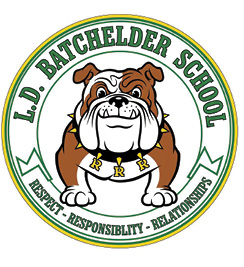
L.D. Batchelder School Principal Michael Maloney revealed the new school seal, which includes the words Respect, Responsibility, Relationships under the school bulldog mascot. It dovetails with the goal to “foster a school culture where character is intentionally woven into the fabric of our community. We will explicitly teach the Bulldog core values and create a system to embed them into our curriculum and school-wide traditions, empowering students to become respectful and responsible students who have positive relationships with themselves and others.”
“The relationship piece is important for kids to be able to have conversations,” Maloney said.
Teacher-to-teacher
peer collaboration
The SIPs are also following a trend in education of teacher-to-teacher peer collaboration and observation. “During professional, school-based team meetings, faculty and staff will discuss instructional strategies, share best practices, and identify/utilize all available data to optimize outcomes for all students,” the Batchelder SIP indicates. “The school leadership team will have this goal as a standing agenda item at monthly meetings. School-based leaders will report the progress towards this goal and highlight specific strategies that were discussed at collaboration meetings. Leaders will share these strategies at Professional Learning Community meetings.”
A Little School goal is “to monitor fidelity and provide instructional coaching; conduct classroom walkthroughs and provide feedback focused on MTSS fidelity, grouping strategies, and instructional quality, and offer ongoing coaching and support for teachers to refine their practice based on student outcomes.”
The Hood SIP includes a goal to “schedule quarterly professional development sessions to refine strategies and share best practices.”