
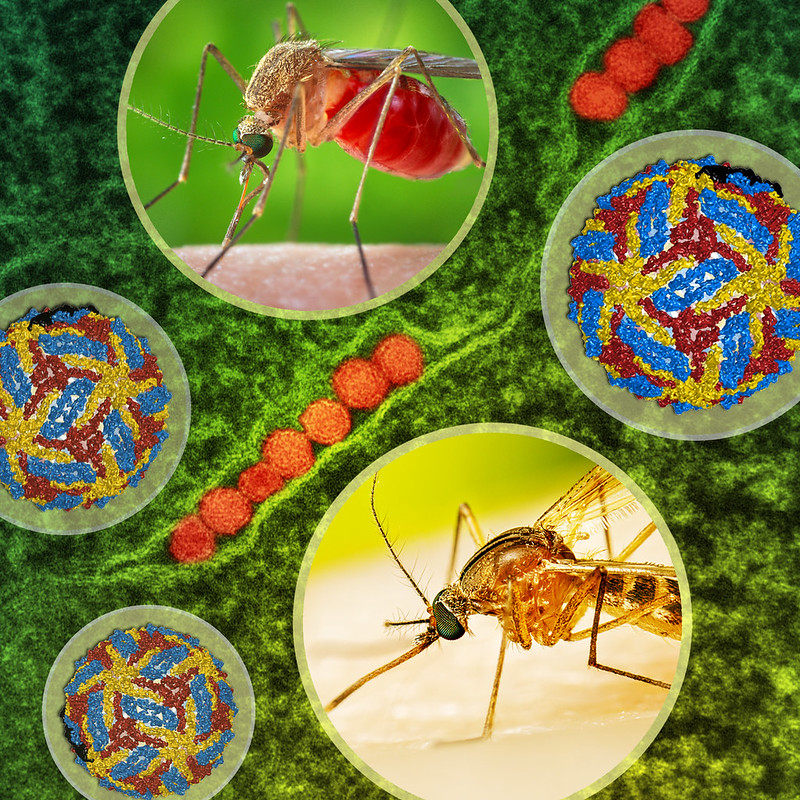
WAKEFIELD — More than a week after positive West Nile virus samples were found in the south and northeast parts of Wakefield, the East Middlesex Mosquito Control Project is planning to use a truck-mounted aerosol sprayer to control mosquito populations in Wakefield between sunset and 11:30 p.m. on Thursday, August 31, 2023. Spraying is scheduled for Lowell Street, Pleasant Street, Vernon Street, Salem Street, Preston Street, Butler Avenue, Montrose Avenue, and surrounding streets in the area. If postponed due to weather, spraying will be rescheduled for the following week.
The mosquito control product being used is Zenivex E4 (EPA Reg. No. 2724.807) and will be applied at 1 oz per acre. Zenivex E4 is a non-ester pyrethroid and is classified by the EPA as a reduced risk pesticide. Mosquito control applications of Zenivex E4 do not pose a significant risk to people or their pets due to the low toxicity and the small amount used to control mosquitoes. As with any pesticide, people should minimize their exposure. If residents see a spray truck approaching, they are advised to go indoors for a few minutes while the spray dissipates. Residents are also advised to close windows. Beekeepers do not need to take any special precautions since spraying begins after sunset. Zenivex E4 biodegrades rapidly and doesn’t build up in the environment.
If residents have any questions related to mosquitoes or mosquito control, contact the East Middlesex Mosquito Control Project at 781-899-5730. The spray schedule can be found on the Project website at http://sudbury.ma.us/emmcp.
The state’s Public Health Lab confirmed late last week that positive West Nile virus mosquito samples were collected in town on Tuesday, August 22.
Most people who contract WNV do not develop any symptoms. However, about 1 in 5 infected people develop a high fever and other symptoms such as headache, body aches, joint pains, vomiting, diarrhea, or rash. The majority of people with WNV who develop a febrile illness recover completely, but fatigue and weakness can last for weeks or months. Approximately 1 in 150 people develop a severe illness affecting the central nervous system such as meningitis or encephalitis. Of those who experience severe illness, a small number may die or develop permanent side effects. People over age 60 or those with certain medical conditions are at greater risk of developing a severe illness from WNV.
The Wakefield Health and Human Services Department is asking residents to take steps now to avoid mosquito bites. While WNV can cause serious illness, there are simple things that you can do to protect yourself and your loved ones:
• Use an insect repellant with an EPA -registered ingredient like DEET or picardin. Do not use DEET on children under 2 months. Children older than 2 months should use DEET with concentrations of 30 percent or less. Permethrin is very effective when applied to clothes, but should not be used directly on skin. Carefully follow instructions on the label, especially when using on children.
• When outdoors, wear long pants, a long sleeve shirt, and socks to keep mosquitos away from your skin.
• Avoid scheduling outdoor events between dusk and dawn when mosquitos are most active.
• Repair any holes in your door and window screens and make sure they are tightly attached to prevent mosquitos from coming into the house.
• Remove areas of standing water around your home, including plastic wading pools and wheelbarrows. Mosquitos can begin to multiply in any puddle or standing water that lasts for more than 4 days.
• Clean clogged roof gutters; remove leaves and debris that may prevent drainage of rainwater.
• Keep swimming pools clean and properly chlorinated. Remove water collected in pool covers.
• Use landscaping to eliminate standing water that collects on your property.
If you have questions or would like to contact Wakefield’s Health and Human Services Department, call (781) 246-6375. You can also read about the East Middlesex Mosquito Control Project, which services Wakefield and surrounding communities.